Before we get on to subjects like emotion and timing, we need to cover the basics of Breath Control:
- How to read the breath control indications in Shakespeare's scripts.
- Some links to useful resources on posture and breathing (very useful!)
- And a defence of why this is important to all actors (no matter what you are performing).
In the previous post (click here), we looked at how a typical line of Iambic Pentameter has a rhythm.
dee-dum, dee-dum, dee-dum, dee-dum, dee-dum
I say "typical" because Shakespeare 'played around' with the form in a way that was revolutionary. For a start (as already mentioned), he added extra 'dee' syllables to alter the mood. Later, I will write about other ways that he stretched this form.
For now, simply note that almost every line, almost every speech, indeed almost the whole play was performed to this rhythm. The rhythm pounded away in the actors' minds as they were speaking their lines, like a musicians playing Baroque music (with its constant beat).
- · Yes, I wrote "almost". There are going to be exceptions to this rule. We will cover them later.
When following a music score, musicians do not add their own pauses – they must follow what is written and keep to the rhythm all the way through the piece. And so it is with a script. Actors must not add their own pauses; just follow what Shakespeare indicated - it's all there if you know how to read it.
For a start, do not pause after every line as if it were a poetry recitation. Remember that Shakespeare was capturing every-day speech patterns in print. So read it out that way.
Example
As an exercise, say the following lines to the "dee-dum dee-dum" rhythm, without any pauses at the end of the first two lines.

OBERON
...
It fell upon a little western flower,
Before milk-white, now purple with love’s wound,
And maidens call it love-in-idleness.
...
Practice these lines repeatedly until you can keep up the "dee-dum" pattern throughout all three lines without stopping or pausing before the full-stop. Each time, breath in at the full-stop, and start again.
When you are doing this correctly, you should notice two things:
1. You did not break the rhythm (ie pause) for the commas. Rather, you indicated them only by the tone of your voice.
2. You found that that it was easiest to keep the rhythm going uninterrupted ... by delivering it all in one breath.
And if you have not noticed this yet, keep practicing until you do!
If you get this far, congratulations! You are well on the way to mastering Shakespearean breath control. Gold star for you!
Breathing rule – end-line stops
You may introduce a slight pause to the rhythm to draw a full breath at an end-line stop. This is where a sentence ends after a line's 5th dum. Let's look at a bit more of Oberon's speech, up to the end.
OBERON
...
Yet mark’d I where the bolt of Cupid fell. //
 It fell upon a little western flower,
Before milk-white, now purple with love’s wound,
And maidens call it love-in-idleness. //
Fetch me that flow’r; the herb I showed thee once. //
The juice of it on sleeping eyelids laid
Will make or man or woman madly dote
Upon the next live creature that it sees. //
Fetch me this herb, and be thou here again
Ere the leviathan can swim a league. //
Again, I am using my own notation (because it works for me). I mark a "//" (double slash) after each end-line stop to indicate that I may breath deeply, if I need to. The actor does not have to take a deep breath at these points, but when it is needed, then this is where it can be taken.
For example, if the speech actually started with "Yet mark'd I where..." (it doesn't), then I personally would not take a breath after "Cupid fell", but after "with love's wound". Why? because the subject does not seems to change from the first line to the start of the second. Both are telling of the bolt falling.
Where the subject does seem to change, then a breath (and its consequent small pause in the rhythm) will be useful for the audience's comprehension. For example, after describing the flower and ending with "call it love-in-idleness.", the subject changes to an order "Fetch". Personally, I would definitely take a full breath here, pausing the rhythm.
Where the subject does seem to change, then a breath (and its consequent small pause in the rhythm) will be useful for the audience's comprehension. For example, after describing the flower and ending with "call it love-in-idleness.", the subject changes to an order "Fetch". Personally, I would definitely take a full breath here, pausing the rhythm.
Breathing rule – half-line stops.
Do not stop for a deep breath if, part way through a full line, one sentence ends and another one starts. Keep the rhythm going.
Example
This comes from a later speech in the same scene...
OBERON
...
But who comes here? I am invisible,
And I will overhear their conference. //
Do not draw a breath after "But who comes here?". Shakespeare is indicating that the sense flows on: these two lines are all one thought.
Breath control – when to break the rules
You can snatch a breath often as you need to. (Purists are going to hate my saying this.) But be careful when you choose to do so. (That's better!)
Example
Look again at the speech we started with, this time from the beginning...
OBERON
That very time I saw (but thou couldst not),
Flying between the cold moon and the earth,
Cupid all arm’d. / A certain aim he took
At a fair vestal thronéd by the west,
And loos’d his love-shaft smartly from his bow,
As it should pierce a hundred thousand hearts; /
But I might see young Cupid’s fiery shaft
Quench’d in the chaste beams of the wat’ry moon,
And the imperial vot’ress passéd on,
In maiden meditation, fancy-free. //
...
Look at this line...
Cupid all arm’d. / A certain aim he took
I have put a "/" mark (single slash) in my script after the full-stop. I have also put one after "a hundred thousand hearts;". These are optional places that I could snatch a quick breath, if I needed to. The aim is to carry on with the rhythm uninterrupted, the sense still flowing on, but yet making sure to have enough breath for what follows.
Digression
No ... before you ask, this is not the same as "cyclic" or "circular" breathing. That applies only to musicians playing certain wind instruments (see here). No, this is simply the snatching the briefest of breaths , so brief in fact that the audience should hardly notice it. The lines should all seem (ie sound) to be part of the same thought.
Breath control – so what's the longest possible single-breath speech in Shakespeare?
You know, at the opera, that moment when the tenor hits an impossibly high note ... and holds it ... and holds it ... and still holds it ... and the audience go wild with applause? Been there, heard that?
Welcome to the theatre's equivalent :- the Seven Line Test.
Back in Shakespeare's time, when audiences really knew their poetry, it was common knowledge that seven lines was the very most an actor could deliver in one breath. I have been taught, but I cannot find any reference to this, that 17th C audiences similarly burst into applause when it was pulled-off successfully. Basically, it was a way for an actor to show off, purely for a moment's entertainment.
With practice (using breathing and posture excises, and practising the lines aloud), you too can successfully pass the seven line test. I am a late-comer to Shakespeare, but I have managed it ... once. I was pleased, the director was pleased, the speech sounded much better for it ....... but no one burst into wild ecstatic applause.
Ah well. Time moves on.
Example
DUKE SENIOR
Now, my co-mates and brothers in exile,
Hath not old custom made this life more sweet
Than that of painted pomp? Are not these woods
More free from peril than the envious court? // 7
Here feel we not the penalty of Adam,
The seasons’ difference, as the icy fang
And churlish chiding of the winter’s wind,
Which when it bites and blows upon my body
Even till I shrink with cold, I smile and say,
“This is no flattery: these are counsellors
That feelingly persuade me what I am.” // 6
Sweet are the uses of adversity,
Which like the toad, ugly and venomous,
Wears yet a precious jewel in his head; /
And this our life, exempt from public haunt,
Finds tongues in trees, books in the running brooks,
Sermons in stones, and good in every thing. //
Yes, this was my personal seven line test (in the middle). And do you see above? There is one more item of my mark-up notation: I have added the number of lines that follow a full-breath. This is helpful when learning the lines – you must learn the breathing at the same time as you learn the lines. It cannot be learned later; that is how bad habits start in
Do we really need to learn breath control?
Developing good breath control is totally worth it. Don't groan; it is. In fact, it is essential.
Remember that Shakespeare entertains through his words, not through stage directions for action. In fact, you will find very few such directions in his scripts; other than entrances and exits, very few other directions were recorded. From the audience's point of view, it is this rhythm and breath control that gives the play its pace, its driving force, and sheer exhilaration. It sweeps them up and carries them along in the story.
So, the actors must keep the words flowing out to the audience at this pace. The moment that needless pauses are added (at the actors' whim), the rate of words slows down. The play loses its pace and energy. Worse, the audience will start anticipating when they should only be reacting, and can easily become bored.
If you have ever heard a theatre-goer say after a performance "it was too wordy for me", blame the actors for slowing down the word rate, not the script for being wordy! I read somewhere that (as measured on the clock) Shakespeare's plays are taking longer and longer to perform as the generations go by. That tells us that successive generations of actors are slowing down the rate of words and they are boring their audiences.
"Keep up the pace!" – that's another command I have often heard called-out in rehearsal (and have sometimes given myself). And now we know why.
If breath-control is difficult for you...
If you have difficulties with breath control (running short), it is because ...
a) your posture is rubbish, and
b) you are not breathing with your diaphragm.
It's not your fault; I am not picking on you. Both are common faults in western / developed countries; blame our furniture. People in so-called primitive societies (lacking chairs, principally) stand right and they also breath right. And that's a fact.
By rights, this is worth an entire blog post by itself, but I only have space to include some links below to some important and useful training resources for these issues. These are essential reading and exercises for all actors, no matter what the play or playwright. Go read them and learn from them. Above all, practice what they teach you (as all first-year drama students have to do). You will be glad you spent the time on this ... and so will your audiences.
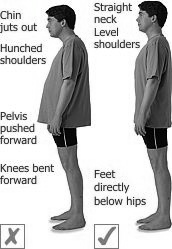
On posture
The art of standing correctly (for deep breaths and being noticed)

On diaphragmatic breathing
This is breathing with the diaphragm, not the chest. The chest muscles, ribs and shoulders remain stationary.
 A note about 'gabbling' the lines quickly.
Don't.
Just ... don't.
Just ... don't.
'Pace' does not mean 'rushing'. Too many actors are guilty of this. Mainly, I suspect, because they did not take the time to understand their lines. If the actor gabbles, then the audience stands no chance to understand the 17th C English.
You think I am exaggerating? I have recordings on DVD where RSC actors are (quite frankly) clattering through a long speech as if to end it as quickly as possible. The result is awful, dire, and impenetrable gibberish.
No names though. I can't afford a lawyer.
Love the words
'Old school' actors talk about "loving the words". This means that every word is important and must be articulated carefully with excellent diction and meaning. This does not mean "slowly" (see 'pace' and 'rhythm', above). Speak each word clearly, and get the meaning across to the audience.
Previous: Discovering hidden meanings

No comments:
Post a Comment
I do not claim to be an expert on delivering the bard's lines. I am a (mature) student who is recording what he has learned over a period of about ten years. Please add your comments / corrections / questions here -- constructively, please. I would be delighted to update the posts as we all learn together.
"Come with a thought, I thank thee..." - TheTemptest.
Note - To prevent spam, this forum is moderated manually; that means comments and responses will not appear immediately; sorry. Let's call it a lesson hard-learned.
"Go wisely and go slowly. Those who rush stumble and fall." – Romeo, in Romeo and Juliet